
Hidden Hills Water Softener & Water Treatment
Water Treatment Services in Hidden Hills
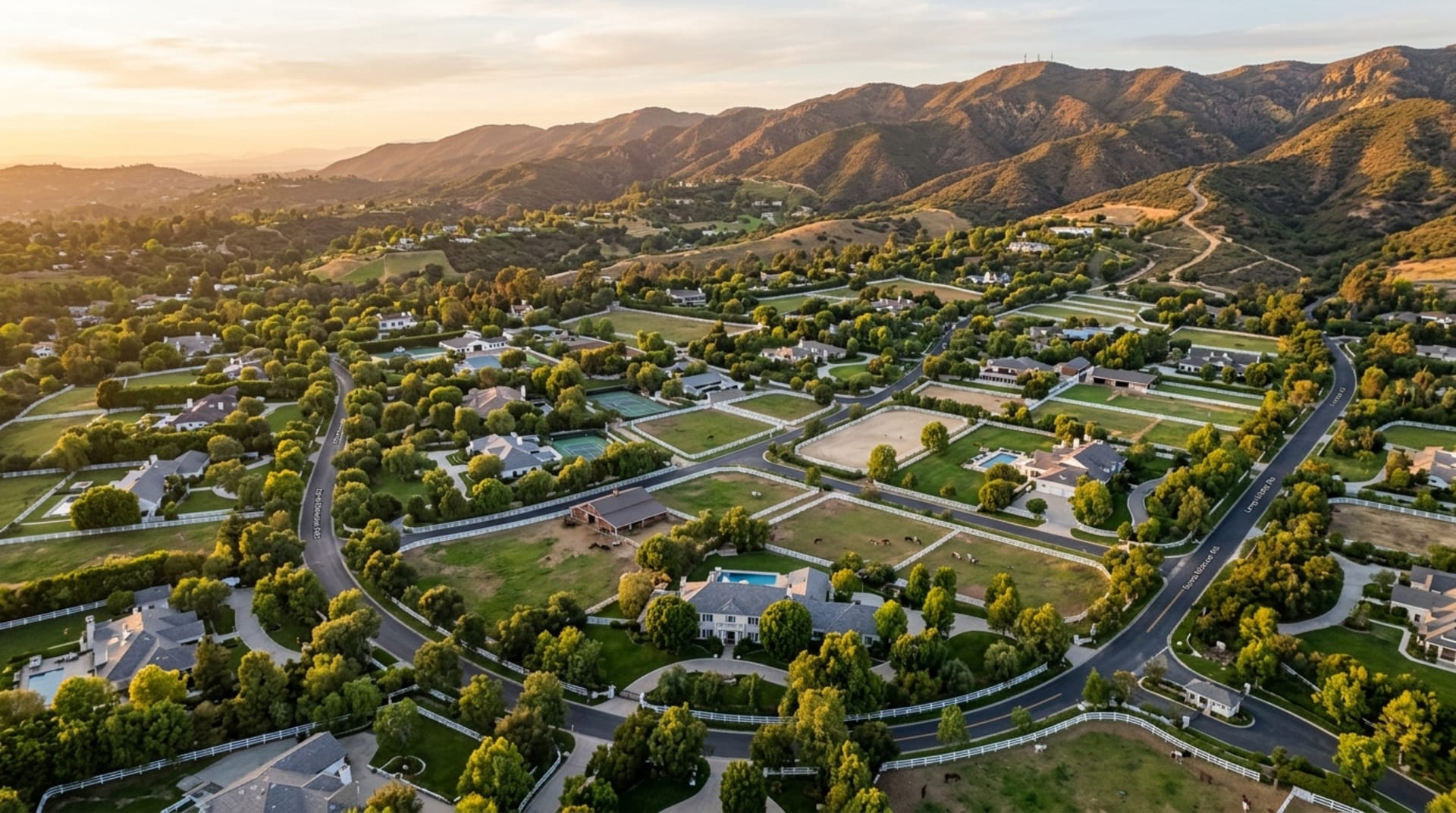
Hidden Hills, one of the most exclusive gated communities in Los Angeles County, receives water from Las Virgenes Municipal Water District. The fully imported supply carries consistent mineral content, and the equestrian properties and large home lots common in Hidden Hills place heavy demands on water systems for irrigation, barns, and multi-residence compounds.
Hidden Hills draws its water entirely from imported sources delivered by the Las Virgenes Municipal Water District, which receives State Water Project supplies through the regional Metropolitan Water District system. Because none of this water originates locally, it arrives carrying the dissolved calcium and magnesium it picked up traveling across hundreds of miles of mineral-laden terrain. The result is moderately hard to hard water, typically measuring between 7 and 10 grains per gallon. For a community defined by gated privacy, sprawling acreage, and equestrian estates, that mineral load touches every part of daily life: the residence, the guest house, the barn wash racks, and the irrigation lines that keep paddocks and pastures green across the rolling hills.
On large Hidden Hills compounds, hard water leaves its signature everywhere. Scale builds inside water heaters and recirculation loops, shortening equipment life and forcing systems to work harder across multi-residence properties. Glass shower enclosures, stone vanities, and fixtures cloud with mineral film that resists ordinary cleaning. Dishwashers and laundry appliances lose efficiency as deposits accumulate, and outdoor spigots near stables develop crusty buildup. With separate structures often running on long plumbing runs, untreated hard water compounds the wear quietly until a fixture fails. Effective water treatment here is less a convenience than a strategy for protecting substantial infrastructure spread across a single estate, from the main house kitchen to the tack room sink.
Water Techniques has served Southern California estates since 1999, and our approach to Hidden Hills reflects the scale of these properties. A whole-home water softener using ion exchange removes the hardness minerals before they reach any fixture, protecting heaters, appliances, and stonework throughout the compound. Whole-home water filtration addresses sediment, chlorine, and taste concerns common to imported supply, while a reverse osmosis system at the kitchen delivers polished drinking water for the family. As a C-55 licensed contractor, we size and stage equipment for multi-building layouts and long runs, then maintain it on a schedule that keeps every residence and outbuilding consistently protected.
Source: the utility's annual water quality report. We test at the home before recommending equipment.
Hidden Hills Water at a Glance
- Water supplier
- Las Virgenes Municipal Water District
- Where it comes from
- Las Virgenes Municipal Water District uses no Colorado River water and no local groundwater: Hidden Hills gets State Water Project water via the Jensen plant, Las Virgenes Reservoir and the Westlake Filtration Plant.
- Hardness: Las Virgenes system
- 119 to 176 (average 142) ppm, or 7 to 10 (average 8) grains per gallon (2025 data)
- Hardness: Jensen plant
- 137 to 142 (average 140) ppm, or about 8 grains per gallon (2025 data)
- WQA hardness rating
- Hard
- Our office
- About 56 miles away in Santa Ana (straight-line distance)
Nearby Service Areas
- Calabasas 2 mi
- Agoura Hills 6 mi
- Westlake Village 9 mi
- Encino 9 mi
- Malibu 9 mi
- Pacific Palisades 11 mi
- All service areas
Hidden Hills Water Questions
Yes. Hidden Hills receives fully imported water through the Las Virgenes Municipal Water District, drawn from the State Water Project. That water carries dissolved calcium and magnesium, producing hardness that typically falls between 7 and 10 grains per gallon. At that level, many homes still see visible scale on fixtures, glass, and appliances, which is why softening is a common consideration here.
The Las Virgenes Municipal Water District supplies Hidden Hills, relying entirely on imported water delivered through the regional Metropolitan Water District system. Because the supply travels long distances and picks up minerals along the way, hardness commonly measures 7 to 10 grains per gallon. That places Hidden Hills in the moderately hard to hard water range, where mineral deposits affect plumbing, water heaters, and surfaces throughout a property.
If you want to protect fixtures, water heaters, and appliances from scale, a water softener is worth serious consideration in Hidden Hills. With hardness in the 7 to 10 grain range and large estates often running multiple structures on long plumbing runs, mineral buildup adds up. A softener removes the calcium and magnesium responsible, helping equipment last longer and keeping glass and stone surfaces clear.
It will. Hidden Hills hard water gets that way from dissolved calcium and magnesium in the imported supply, and an ion exchange water softener removes those specific minerals before they reach your plumbing. That reduces scale in water heaters, protects appliances across the main house and outbuildings, and prevents the cloudy film on glass and fixtures. For drinking water, pairing softening with reverse osmosis gives you a complete solution.
For the sizable compounds common in Hidden Hills, a layered approach works best: a whole-home water softener to remove hardness, whole-home water filtration to address chlorine and sediment from the imported supply, and a reverse osmosis system at the kitchen for drinking water. Water Techniques sizes and stages this equipment for multi-residence properties, barns, and long plumbing runs, then maintains it so every structure stays protected.

Ready to Elevate
Your Water?
Our water specialists serve Hidden Hills and surrounding Los Angeles County communities. Contact us for a complimentary water quality assessment and system recommendation tailored to your home.
(714) 384-4500