
Calabasas Water Softener & Water Treatment
Water Treatment Services in Calabasas
Las Virgenes Municipal Water District supplies Calabasas with water sourced entirely from Metropolitan Water District imports, as the Santa Monica Mountains terrain offers limited local groundwater. The imported State Water Project supply carries moderate hardness, which still affects the luxury home systems, outdoor water features, and expansive landscaping throughout the gated communities.
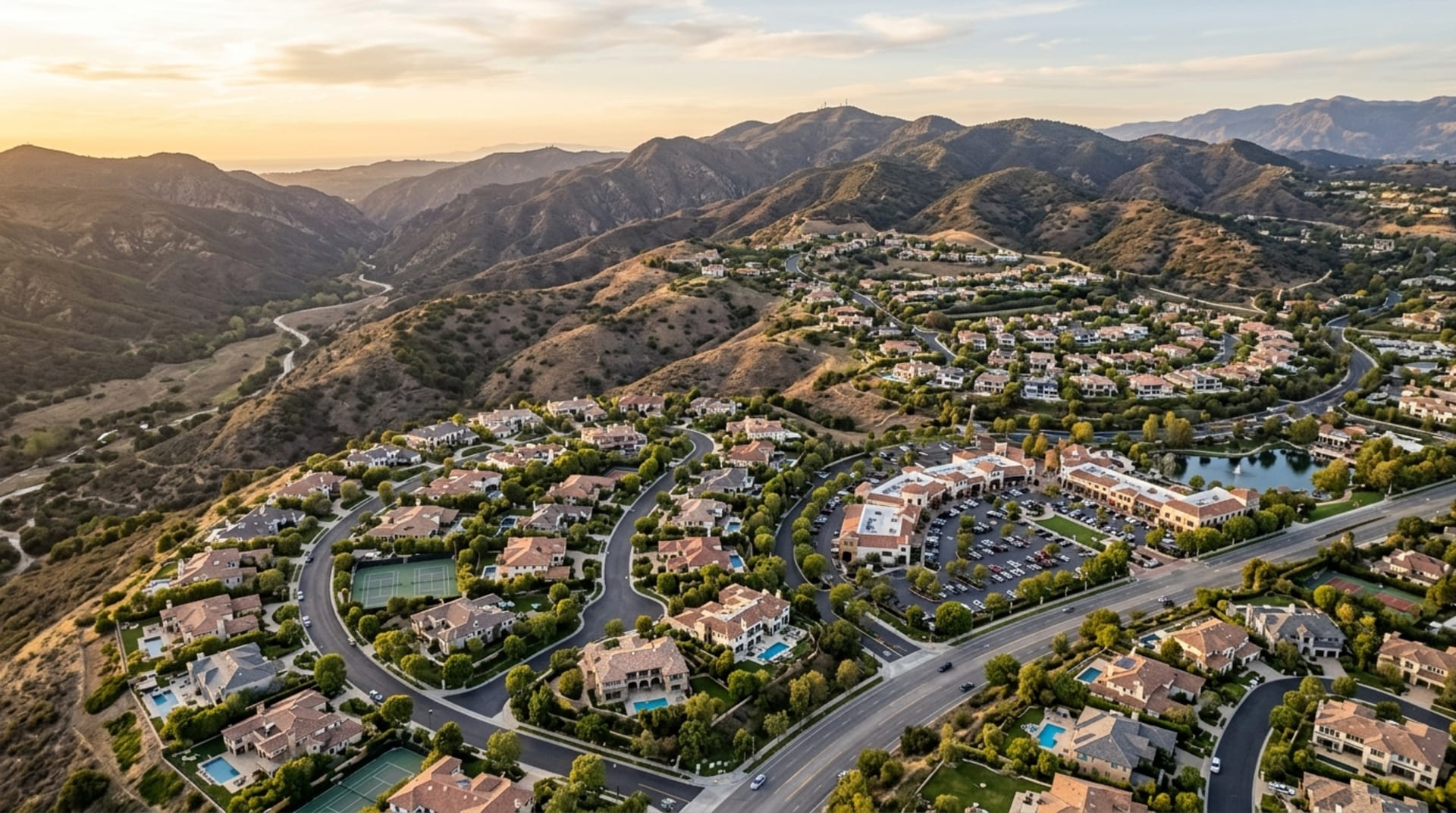
Calabasas sits in the Santa Monica Mountains, where thin local groundwater can never meet the demand of its hillside estates. Water service comes from Las Virgenes Municipal Water District, which buys all of its drinking water from the Metropolitan Water District. That imported water travels hundreds of miles through the State Water Project before reaching taps off Mulholland Highway and the gated communities near the lake. Along the way it dissolves calcium and magnesium from rock and soil, which is why Calabasas households see moderately hard to hard water in the range of 7-10 grains per gallon. At that level the mineral load is still enough to leave a steady, visible footprint on plumbing, glass, and finishes throughout the home.
In Calabasas homes, that hardness shows up in places owners notice and places they do not. Scale forms inside tankless and storage water heaters, narrowing the efficiency owners paid a premium for. It clouds frameless glass shower enclosures, etches imported stone, and leaves chalky film on fixtures and infinity-edge water features that define so many estates here. Irrigation lines feeding mature landscaping and pool equipment collect the same deposits. Because the supply carries these minerals year round, the buildup is cumulative rather than seasonal, which means even newer construction in the hills above the Commons begins accumulating scale long before a homeowner traces the cause back to the water itself.
Water Techniques has treated Southern California water since 1999, and addresses Calabasas conditions as a system rather than a single fix. An ion-exchange water softener removes the calcium and magnesium that drive scale, protecting heaters, appliances, and stone surfaces. Whole-home water filtration reduces sediment and chlorine taste carried through the imported supply, while a reverse osmosis system delivers polished drinking water at the kitchen tap without bottles. Each installation is sized to the household, its fixtures, and its landscape demand, then maintained on a schedule so performance holds. The goal is straightforward water treatment that suits the scale and finishes of a Calabasas estate. To discuss your home, call (714) 384-4500.
Source: the utility's annual water quality report. We test at the home before recommending equipment.
Calabasas Water at a Glance
- Water supplier
- Las Virgenes Municipal Water District
- Where it comes from
- Calabasas water is 100 percent imported State Water Project water from the Metropolitan Jensen plant, stored in Las Virgenes Reservoir and filtered at the Westlake Filtration Plant.
- Hardness: Las Virgenes system
- 119 to 176 (average 142) ppm, or 7 to 10 (average 8) grains per gallon (2025 data)
- Hardness: Jensen plant
- 137 to 142 (average 140) ppm, or about 8 grains per gallon (2025 data)
- WQA hardness rating
- Hard
- Our office
- About 55 miles away in Santa Ana (straight-line distance)
Nearby Service Areas
- Hidden Hills 2 mi
- Agoura Hills 7 mi
- Malibu 8 mi
- Encino 8 mi
- Westlake Village 9 mi
- Pacific Palisades 9 mi
- All service areas
Calabasas Water Questions
Yes, moderately. Calabasas water typically tests in the 7-10 grains per gallon range, which is moderately hard to hard. The supply is entirely imported through the Metropolitan Water District, and that imported water carries dissolved calcium and magnesium picked up across its long journey. Those minerals are what produce the scale and spotting most local homeowners eventually notice on glass and fixtures.
Las Virgenes Municipal Water District serves Calabasas and the surrounding Santa Monica Mountains communities. Because local groundwater is limited in this terrain, the district relies on imported supply from the Metropolitan Water District, delivered via the State Water Project. That single source is the main reason hardness levels stay fairly consistent throughout the year.
If you want to protect water heaters, appliances, frameless glass, and stone surfaces, a water softener is worth serious consideration here. At 7-10 grains per gallon, scale still accumulates inside plumbing and fixtures. An ion-exchange softener removes the calcium and magnesium responsible, which slows that buildup and helps preserve the finishes and equipment common in Calabasas estates.
It directly targets the cause. Calabasas hardness comes from dissolved calcium and magnesium in the imported supply, and a water softener uses ion exchange to remove those minerals before they reach your plumbing. That reduces scale on heaters, glass, and fixtures, cuts spotting, and lets soaps lather more effectively. Paired with whole-home filtration, it also improves the overall feel and taste of the water.
Most Calabasas estates benefit from a layered approach: an ion-exchange water softener to control scale, whole-home water filtration to reduce sediment and chlorine taste from the imported supply, and a reverse osmosis system for polished drinking water at the kitchen tap. Water Techniques sizes each component to the household, its fixtures, and its landscape demand, then maintains the system so performance holds over time.

Ready to Elevate
Your Water?
Our water specialists serve Calabasas and surrounding Los Angeles County communities. Contact us for a complimentary water quality assessment and system recommendation tailored to your home.
(714) 384-4500