
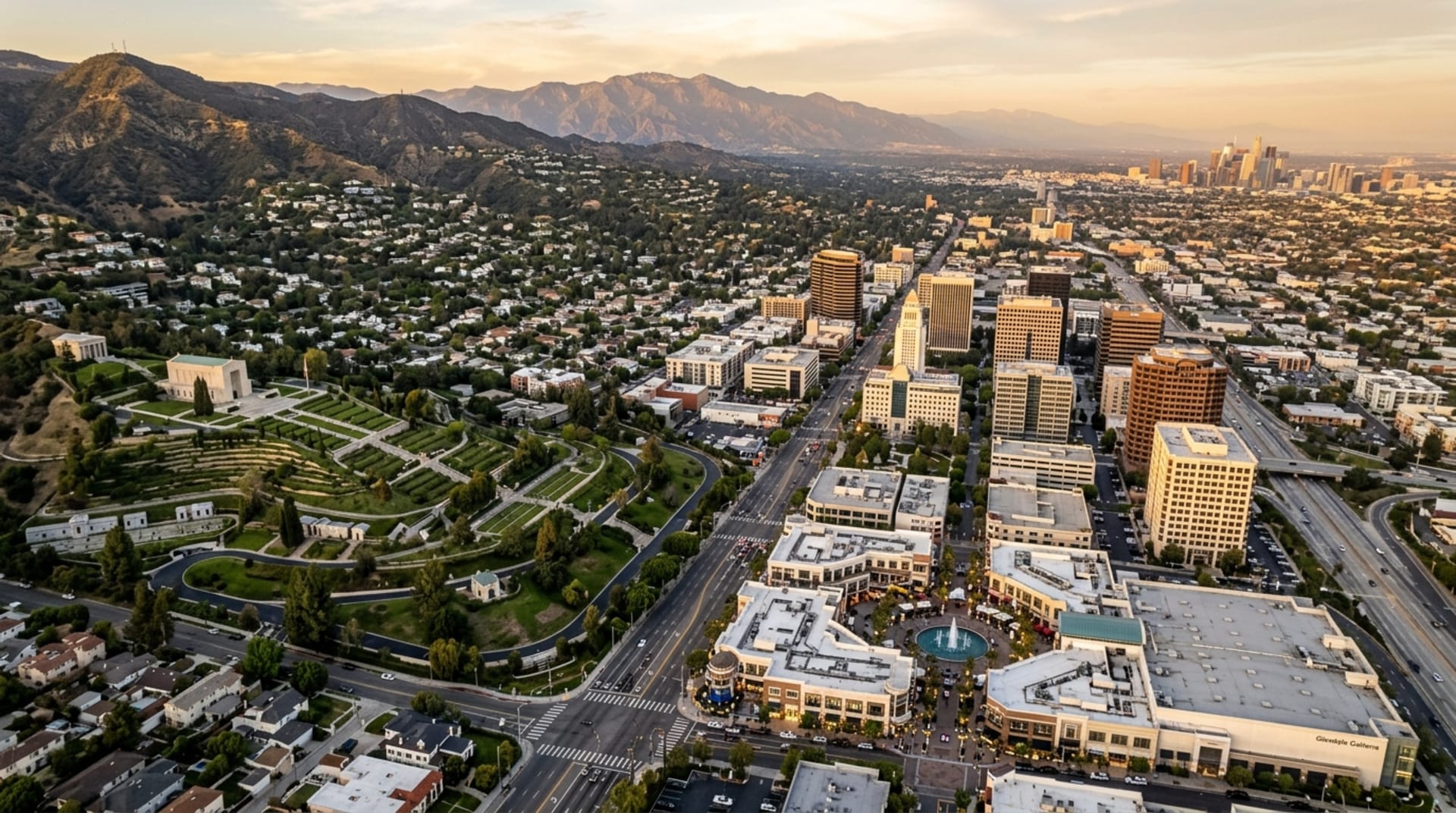
Glendale Water Softener & Water Treatment
Water Treatment Services in Glendale
Glendale Water & Power buys about two thirds of its drinking water from Metropolitan and pumps most of the rest from San Fernando Basin wells treated at the Glendale Water Treatment Plant. The treated well water carries high calcium and magnesium concentrations, about 20 grains per gallon, so neighborhoods receiving more of it test at the upper end of the hardness range, creating persistent scaling on residential systems.
Glendale draws its supply from Glendale Water & Power, which blends treated water imported through the regional Metropolitan system, roughly two thirds of the supply, with groundwater pumped from the San Fernando Basin. That groundwater moves slowly through alluvial deposits beneath the valley floor, dissolving calcium and magnesium along the way. The result is hard to very hard water, commonly testing in the 8-20 GPG range, with areas receiving more groundwater near the upper end. For homeowners in Glendale, this means a daily, mostly invisible load of dissolved minerals arriving at every tap, a defining characteristic of the local water that shapes how a home's plumbing, fixtures, and appliances age over time.
Hard water leaves its signature throughout a Glendale home. Calcium and magnesium precipitate as scale inside water heaters and recirculation lines, forming a chalky film on shower glass, polished stone, and fixtures in hillside homes from Rossmoyne to the Oakmont and Chevy Chase areas. Spotting on glassware returns after every wash, soaps and shampoos lather poorly, and irrigation emitters serving mature landscaping clog with mineral buildup. A properly sized water softener using ion exchange removes the hardness minerals before they can deposit, protecting tankless heaters and the long fixture runs common in larger estates. This is the foundation of effective water treatment here: address the hardness first, then refine everything downstream.
Water Techniques has served Southern California estates since 1999 as a C-55 licensed contractor, and our approach in Glendale begins with testing your actual hardness rather than assuming a single number across the city. We design whole-home water filtration to manage sediment, chlorine, and taste, pair it with a correctly sized water softener, and add a reverse osmosis system at the kitchen for polished drinking water. Because some addresses can test higher, we calibrate capacity to your household and water profile, then maintain it on a schedule so performance holds. To discuss the right configuration for your Glendale home, call (714) 384-4500 and we will walk through your options.
Source: the utility's annual water quality report. We test at the home before recommending equipment.
Glendale Water at a Glance
- Water supplier
- Glendale Water & Power
- Where it comes from
- Glendale's 2025 supply was 63.3 percent Metropolitan water from Northern California and the Colorado River, 31.3 percent San Fernando Basin groundwater from the Glendale Water Treatment Plant, and 5.4 percent non-potable recycled water.
- Hardness: Jensen plant
- 137 to 142 ppm, or 8 grains per gallon (2025 data)
- Hardness: Weymouth plant
- 189 to 280 ppm, or 11 to 16 grains per gallon (2025 data)
- Hardness: Glendale Water Treatment Plant
- 350 ppm, or 20 grains per gallon (2025 data)
- WQA hardness rating
- Hard to very hard
- Our office
- About 38 miles away in Santa Ana (straight-line distance)
Nearby Service Areas
- Burbank 4 mi
- La Canada Flintridge 5 mi
- Pasadena 6 mi
- San Marino 8 mi
- Beverly Hills 10 mi
- Sherman Oaks 12 mi
- All service areas
Glendale Water Questions
Yes. Glendale water is hard to very hard, commonly testing between 8 and 20 grains per gallon. The supply blends imported water with San Fernando Basin groundwater, and that groundwater picks up calcium and magnesium as it moves through local soils. Areas receiving more groundwater test toward the upper end of that range, so hardness is a consistent factor across most Glendale homes.
Glendale Water & Power supplies the city, combining treated imported water from the regional Metropolitan system with pumped groundwater from the San Fernando Basin. Typical hardness falls in the 8-20 GPG range. Because the blend and the source wells vary by area, the exact figure at your address can shift, which is why on-site testing gives a more reliable number than a citywide average.
Most Glendale homes benefit from one. At 8-20 GPG, scale accumulates steadily in water heaters, plumbing, and fixtures, and you will notice it on glass and stone surfaces. A water softener using ion exchange removes the hardness minerals before they deposit, extending appliance life and improving how soaps perform. Homes in higher-testing areas tend to see the clearest difference after installation.
It will, because Glendale's primary water issue is dissolved hardness rather than a single contaminant. A softener directly targets the calcium and magnesium responsible for scale buildup, spotting, and reduced lather. Paired with whole-home water filtration for chlorine, sediment, and taste, it addresses the most common complaints local homeowners report. Sizing it to your measured hardness and household demand is what determines long-term results.
A layered approach works well here. Start with a properly sized water softener to handle the 8-20 GPG hardness, add whole-home water filtration to reduce chlorine, sediment, and odor, and install a reverse osmosis system at the kitchen sink for polished drinking water. For larger estates with long plumbing runs, capacity and maintenance scheduling matter. Water Techniques tests first, then configures the system to your specific Glendale water profile.

Ready to Elevate
Your Water?
Our water specialists serve Glendale and surrounding Los Angeles County communities. Contact us for a complimentary water quality assessment and system recommendation tailored to your home.
(714) 384-4500