
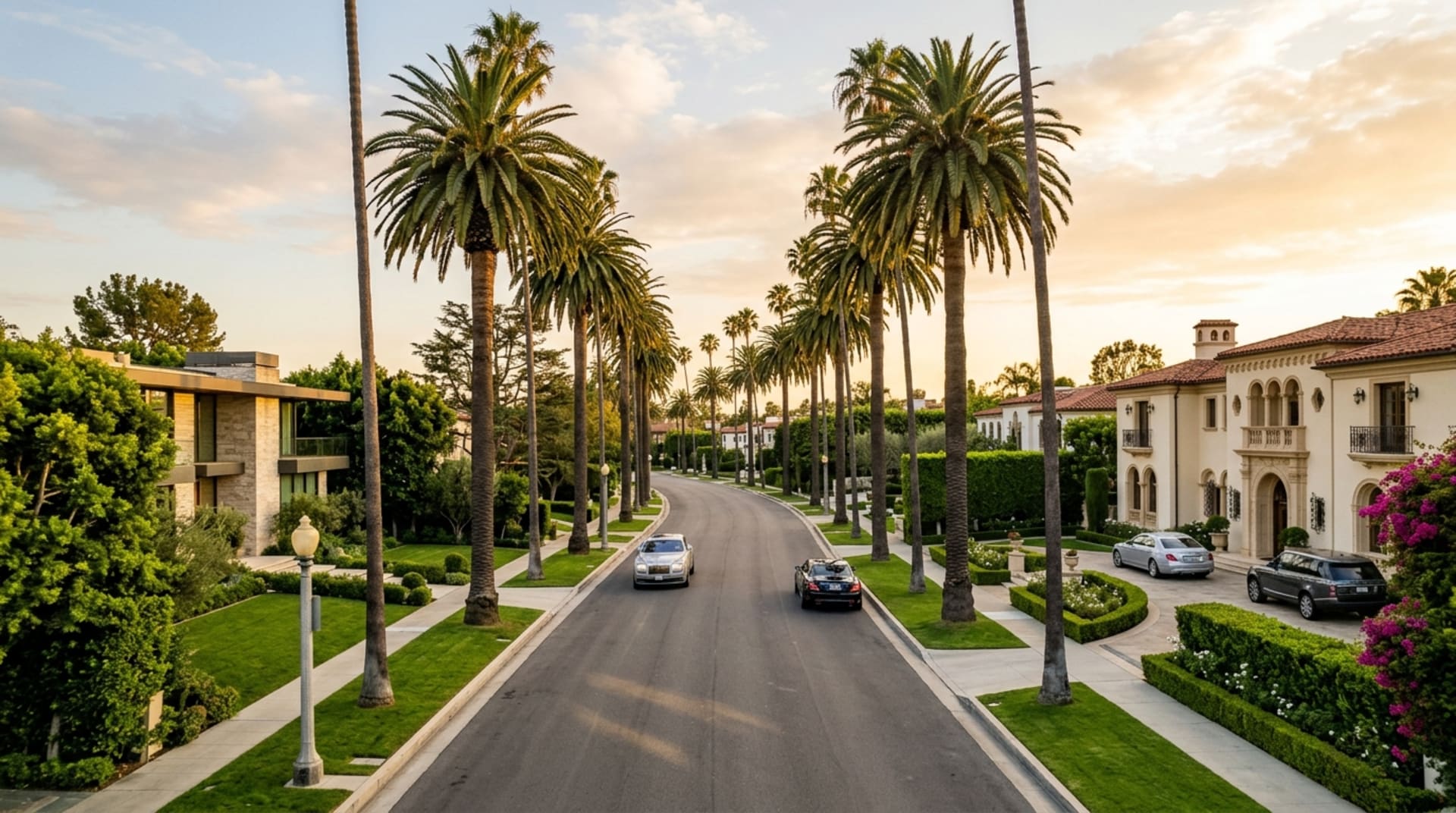
Beverly Hills Water Softener & Water Treatment
Water Treatment Services in Beverly Hills
The City of Beverly Hills operates its own water system, drawing from a combination of local groundwater wells and imported Metropolitan Water District supplies. The City reports average hardness of about 5 to 9 grains per gallon, and estate properties throughout the Flats and hillside areas often choose whole-home treatment to protect premium fixtures, wellness amenities, and irrigated landscapes from mineral scale.
Beverly Hills draws its tap water from the City of Beverly Hills Water utility, which blends supply from local groundwater wells with imported water purchased from the Metropolitan Water District. That imported portion travels hundreds of miles through the Colorado River Aqueduct and the State Water Project, picking up dissolved calcium and magnesium along the way, while the local well water is treated by reverse osmosis at the City's Foothill Water Treatment Plant, which removes much of its mineral content. The City reports average hardness of about 5-9 GPG, moderately hard to hard. For homeowners across the Flats and the hillside estates above Sunset, this mineral content is a common reason fixtures, glass, and appliances lose their finish faster than they should, and it is why many properties here benefit from dedicated water treatment.
In a city where interiors are designed and maintained to a high standard, hard water leaves a visible mark. Scale settles on polished chrome and brushed nickel, etches frameless shower glass, and clouds the stemware that comes out of the dishwasher. Inside the walls, calcium and magnesium accumulate in water heaters and recirculating lines, which is a meaningful concern in the larger Beverly Hills estates that run extensive plumbing and multiple bathrooms. Landscape irrigation across the hillside lots can also leave mineral spotting on stone, pavers, and exterior glazing. A properly sized water softener reverses the source of these problems by removing the hardness minerals before they ever reach a faucet, valve, or appliance in the home.
Water Techniques has served Southern California estates since 1999, and we approach each Beverly Hills property as a complete system rather than a single fixture. We begin by testing the incoming supply, then specify ion-exchange softening to address the 5-9 GPG hardness, paired with whole-home water filtration to reduce sediment, chlorine, and taste-and-odor compounds throughout the house. For drinking and cooking, a reverse osmosis system installed at the kitchen delivers polished water at the tap, and we can extend it to ice makers and pot fillers. As a C-55 licensed contractor, we handle design, installation, and ongoing service, so the equipment stays calibrated to how your Beverly Hills home actually uses water.
Source: the utility's annual water quality report. We test at the home before recommending equipment.
Beverly Hills Water at a Glance
- Water supplier
- City of Beverly Hills Water
- Where it comes from
- Seven City wells in the Hollywood and Central Basins feed the Foothill Water Treatment Plant, which uses reverse osmosis; the remainder is imported Metropolitan water from the Jensen and Weymouth plants.
- Hardness: City-reported average range
- 81 to 153 ppm, or 5 to 9 grains per gallon (2025 data)
- Hardness: Treated City groundwater
- 145 ppm, or 8 grains per gallon (2025 data)
- WQA hardness rating
- Moderately hard to hard
- Our office
- About 40 miles away in Santa Ana (straight-line distance)
Nearby Service Areas
- Bel Air 3 mi
- Brentwood 5 mi
- Sherman Oaks 6 mi
- Santa Monica 6 mi
- Pacific Palisades 8 mi
- Encino 9 mi
- All service areas
Beverly Hills Water Questions
Moderately hard to hard. The City of Beverly Hills Water utility reports average hardness of about 5-9 GPG. The supply combines local groundwater, treated by reverse osmosis at the City's Foothill plant, with imported Metropolitan Water District water, and the delivered blend still carries dissolved calcium and magnesium. That mineral content is what produces scale on fixtures, spotting on glassware, and buildup inside water heaters in homes throughout the city.
Many homes here benefit from one. At 5-9 GPG, the local supply still deposits enough calcium and magnesium over time to spot fixtures, film shower glass, and build scale in water heaters and appliances. A water softener removes those hardness minerals before they circulate, which protects plumbing and keeps finishes looking the way they were intended. For larger estates with extensive plumbing, the case is even stronger.
The City of Beverly Hills Water utility supplies the area, drawing on local wells and imported water from the Metropolitan Water District. The City reports average hardness between about 5 and 9 GPG. The imported portion picks up minerals over long distances through regional aqueducts, while the local groundwater is treated by reverse osmosis, so the blended supply reaching homes in the Flats and the hillsides is moderately hard to hard.
Yes. Ion-exchange softening is designed specifically for the calcium and magnesium that give local water its 5-9 GPG hardness. By removing those minerals at the point of entry, a softener stops new scale from forming on fixtures, glass, water heaters, and appliances. Many Beverly Hills homeowners pair softening with whole-home filtration to also reduce chlorine, sediment, and taste-and-odor issues throughout the house.
A layered approach works well here. Start with a water softener sized to the 5-9 GPG hardness, add whole-home water filtration to address chlorine and sediment, and install a reverse osmosis system at the kitchen for drinking and cooking water. Water Techniques tests your incoming supply first, then specifies and services a configuration matched to your Beverly Hills property and how the household uses water.

Ready to Elevate
Your Water?
Our water specialists serve Beverly Hills and surrounding Los Angeles County communities. Contact us for a complimentary water quality assessment and system recommendation tailored to your home.
(714) 384-4500