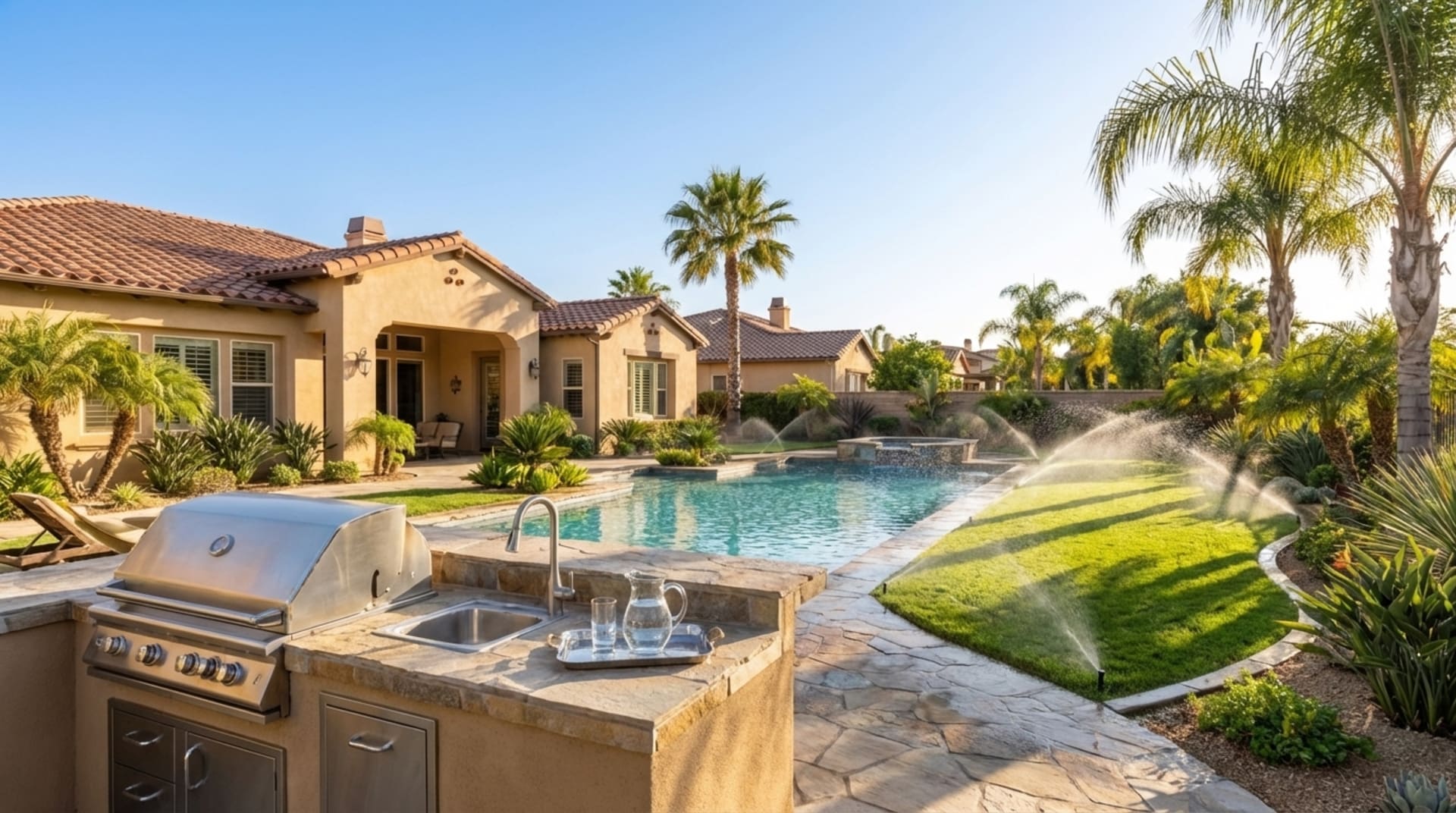
Summer in Southern California puts extraordinary demands on residential water systems. Outdoor irrigation, water features, and high household use can push peak weekly demand higher just when supply and rates are most strained. For properties with fountains and large irrigated landscapes, the cumulative draw on your water supply can tax equipment and inflate utility costs significantly.
Proactive leak detection is one of the most impactful investments a homeowner can make before summer arrives. Modern flow-based monitoring systems can identify leaks as small as a single drip per second by comparing real-time consumption against established baselines. These systems distinguish between normal usage patterns and anomalies, alerting you to underground pipe failures, irrigation line breaks, or slow fixture leaks before they cause structural damage or water waste. For estates with complex plumbing networks spanning main residences, guest houses, and outdoor facilities, zone-by-zone monitoring provides granular visibility into where water is being consumed and where losses may be occurring.
Reverse osmosis systems also need seasonal maintenance attention. Higher inlet water temperatures reduce membrane efficiency and can increase the passage of dissolved solids through the membrane. A pre-summer service visit should include membrane inspection, pressure testing, pre-filter replacement, and sanitization of the storage tank. For estates that rely on RO water for drinking, cooking, and ice production, maintaining peak system performance during summer ensures consistent water quality when demand is highest.
Finally, consider your irrigation pre-treatment strategy. Softened or filtered irrigation water prevents emitter clogging, reduces mineral spotting on hardscape surfaces and parked vehicles, and can improve soil permeability over time. Paired with smart irrigation controllers that adjust schedules based on weather data and soil moisture sensors, a well-managed water system can reduce outdoor water consumption by 30 to 50 percent without compromising landscape health or aesthetic standards.
Frequently asked questions
Irrigation drift and undetected leaks. Controllers ramp up runtime automatically as temperatures climb, and small irrigation line breaks that hide easily during winter become significant losses during peak season. A pre-summer audit of irrigation controllers, line pressure, and zone-by-zone flow is the highest-leverage check a homeowner can run.
Yes. Higher inlet water temperatures reduce membrane efficiency and can let more dissolved solids pass through, which compounds during high-demand summer months. A pre-summer service should include membrane inspection, pressure testing, pre-filter replacement, and sanitization of the storage tank.
Smart flow-based monitors learn your home’s normal usage patterns over a few weeks and detect anomalies as small as a single drip per second by comparing real-time flow against the baseline. Standard alarms typically only trigger on catastrophic events such as a burst pipe and miss the slow leaks that cause most cumulative damage.
For irrigation specifically, conditioned water reduces emitter clogging, mineral spotting on hardscape and vehicles, and over time improves soil permeability. Paired with a smart controller that adjusts to weather and soil moisture data, well-managed irrigation can cut outdoor consumption 30 to 50 percent without compromising landscape health.


